Email Labels, Folders, and Categories: The AI-Powered Approach
The Evolution of Email Organization
For decades, email organization meant folders. One email, one folder. If a message related to multiple projects or clients, you had to choose. The system was rigid, hierarchical, and fundamentally at odds with how modern work actually happens.
Then Gmail changed everything in 2004 by introducing labels. Instead of forcing emails into single folders, labels allowed multiple tags on a single message. This flexibility matched reality better—a message about a client's project could be labeled both "ClientName" and "ProjectAlpha."
But even labels require human effort. Someone has to decide which labels apply, remember to apply them consistently, and maintain a reasonable taxonomy. With the average office worker receiving 121 business emails daily, manual labeling quickly becomes untenable.
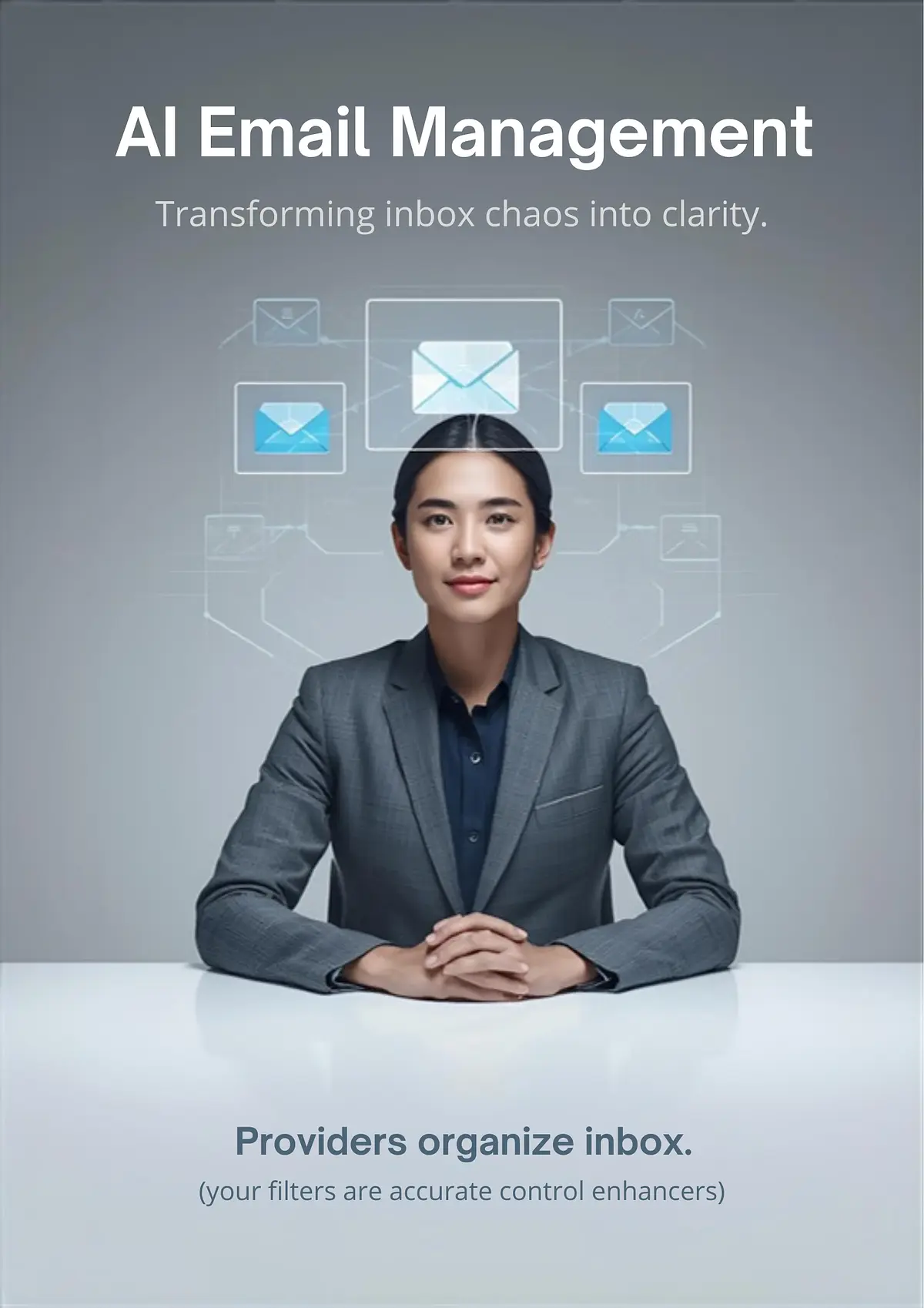
This is where AI enters the picture. AI can automatically analyze email content and apply relevant labels at scale, intelligently categorizing your inbox without requiring manual intervention.
The Pain of Manual Organization
Let's be honest about what manual organization costs:
The average knowledge worker spends 10-12 hours every week on email-related tasks—28% of a standard workweek. A significant portion of that time goes to the mechanical work of organizing, sorting, and searching for messages.
Professionals spend up to 5 hours per day managing their inboxes. That's almost half the workday for some people. Beyond the time cost, there's the psychological toll of an cluttered, disorganized inbox. Studies consistently show that email stress contributes to burnout and reduced focus on meaningful work.
Manual folder and label systems require constant decisions: "Where does this go?" This decision fatigue compounds throughout the day.
How AI Transforms Email Organization
Automatic Labeling Based on Content
AI systems use Natural Language Processing to understand email content. They can identify:
Project references: An email mentioning "Q3 budget review" automatically receives a Q3 label
Client names: Emails from or about specific clients get tagged appropriately
Subject matter: Is this about a bug, a feature request, a billing issue, or a partnership opportunity?
Sender intent: Does the email require action, provide information, or request feedback?
The system learns from feedback. When you correct a misclassified email, the AI improves.
Dynamic Folder Creation
Rather than forcing you to pre-define a folder structure, intelligent systems can suggest and create folders based on your actual email patterns. If you suddenly receive multiple emails about a new project, the system might automatically create a folder for it.
Smart Search and Retrieval
Once emails are properly labeled and organized, finding specific messages becomes instant. Ask natural language questions like "show me all budget-related emails from the marketing team" and the system retrieves them immediately.
Real-World Examples of AI Email Organization
Shortwave's Intelligent Search
Shortwave, an AI email assistant, demonstrates advanced search capabilities. Instead of keyword searching, you can ask: "What are the action items from the Q3 planning meeting?" The AI scans relevant emails, understands context, and provides a summarized list of tasks. This goes far beyond traditional search.
Microsoft Copilot's Analysis Features
Microsoft Copilot for Outlook analyzes email tone and clarity, suggesting improvements. But more importantly for organization, it understands your work context—projects, meetings, collaborators—to automatically prioritize and categorize messages accordingly.
6sense BDR Performance Example
Sales teams using AI email assistants experience dramatic productivity improvements. One case study showed Business Development Representatives (BDRs) significantly improving their outreach personalization and engagement. The AI helped them organize and categorize prospect emails, segment audiences, and track communication workflows automatically.
The Business Case for AI Organization
The numbers are compelling:
87% of businesses use AI in email workflows, though only 6% are high performers
Teams using AI report 77% faster task completion
45% productivity boost overall
Customers respond twice as fast when using AI email management
For customer support teams, the impact is even more dramatic. Emails automatically routed to the right specialist, properly categorized by issue type, enable faster response times and better customer satisfaction.
Benefits Beyond Time Savings
Reduced Cognitive Load
Your brain doesn't have to make hundreds of organizational decisions. AI handles the mechanical work, freeing your mental energy for actual communication and strategy.
Consistency
Manual labeling systems drift over time. One person tags something "client-abc" while another uses "ABC Client." AI applies consistent labeling automatically.
Scalability
As your email volume grows, manual organization becomes impossible. AI scales effortlessly. Ten emails per day or ten thousand—the categorization stays consistent.
Actionability
A well-organized inbox becomes actionable. You can quickly find all emails requiring your signature. All messages from a specific client. All unresolved support tickets. The organization becomes a tool for productivity, not just filing.
Addressing the Skeptics: Privacy and Accuracy
Two legitimate concerns deserve attention:
Privacy: AI email tools require access to your inbox content. Choose providers with transparent data practices, strong security certifications, and clear privacy policies. Understand how your data is used and stored.
Accuracy: AI isn't perfect. It can misclassify emails, especially in edge cases. The solution is human-in-the-loop design: AI suggests labels, you verify and correct them. Over time, accuracy improves.
The Future of Email Organization
The future belongs to systems that understand context, learn from behavior, and adapt to individual workflows. Rather than forcing you into a pre-defined taxonomy, AI will learn your unique needs and organize accordingly.
Consider implementing AI-powered organization gradually. Start with one or two important categories and let the system learn. As you gain confidence and see the time savings, expand to more comprehensive organization.
The email organization systems that win won't be the most feature-rich. They'll be the ones that understand your work, stay out of your way, and simply deliver an organized inbox—automatically.
Learn More
Discover how AI triage systems work to prioritize your inbox
External Sources
Zapier: Best AI Email Assistants
Mailbird: Email Organization Folders and Tagging System Guide
GetInboxZero: How to Reduce Email Overload
6sense: BDR Performance with AI Email Assistants