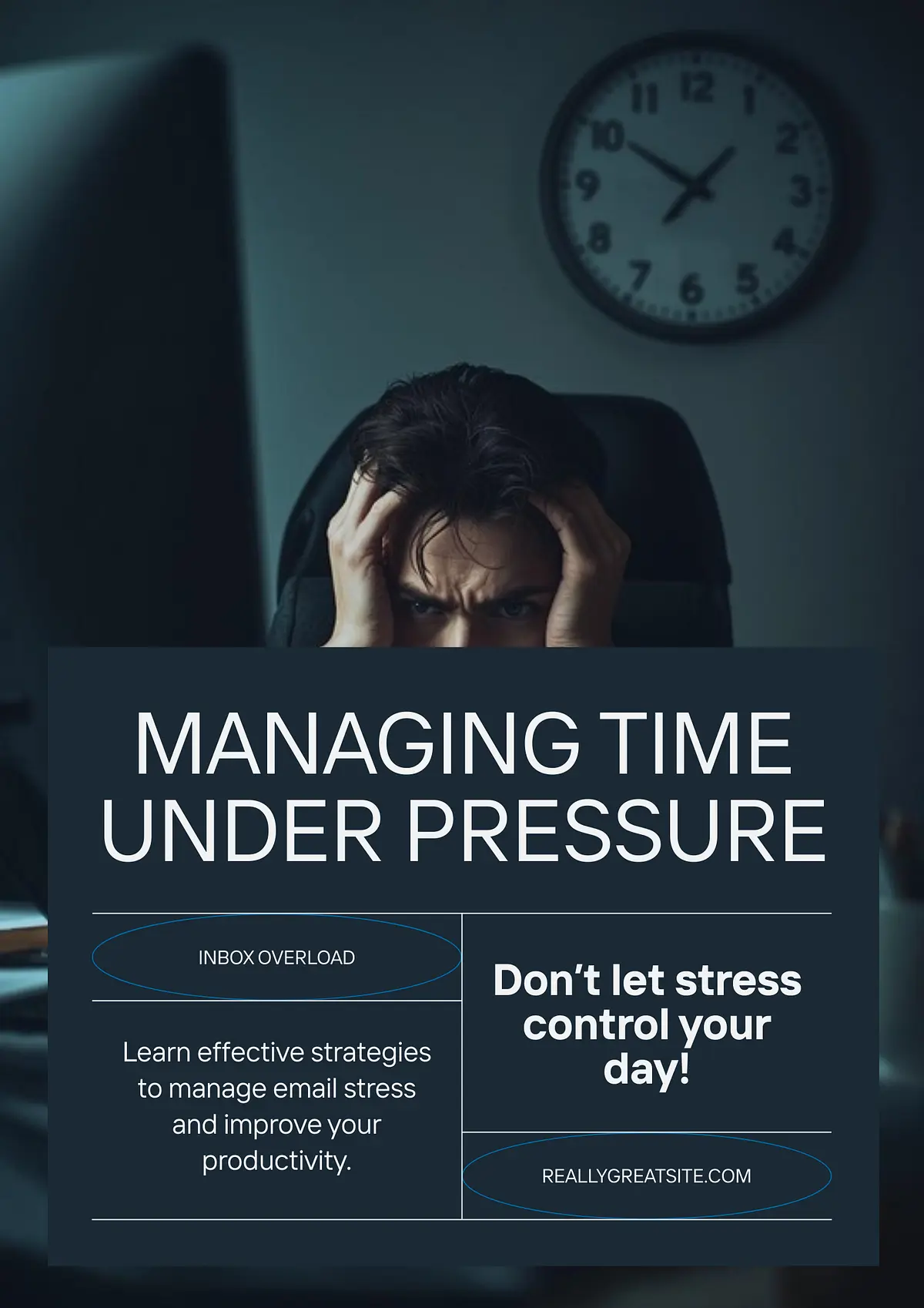
The Psychology of Email Response Time: What Your Inbox Says About You
You receive an email at 6:47 PM on a Friday evening. It's not marked urgent. The sender doesn't call or text about it. Yet your palms sweat a little. You feel the pull to respond immediately. If you don't answer by Monday morning, you worry the sender will think you're ignoring them or don't care.
This anxiety is real, and it's not your imagination. It's rooted in a psychological phenomenon that researchers have only recently named: the "email urgency bias."
The Email Urgency Bias
In 2021, researchers in the Organizational Behavior and Human Decision Processes journal identified something remarkable. People who receive non-urgent work emails sent outside normal business hours consistently overestimate how quickly the sender expects a response. This mental overestimation is called "email urgency bias," and it's directly linked to increased perceived stress and lower subjective well-being.
The real revelation: a simple note from the sender—something as small as "no rush on this"—dramatically reduces anxiety and stress for the recipient.
Think about that for a moment. Just a few words can eliminate the unnecessary psychological burden your email places on someone. Yet most of us send emails without this consideration, leaving recipients anxious about an expectation we never actually set.
The Expectations Gap
The numbers tell a striking story. A recent survey found that 81% of professionals expect an email response within one business day. Within that group, 21% prefer a response within four hours. Meanwhile, approximately 50% of professionals actually respond to work emails within about two hours.
This creates a constant state of low-grade crisis. The expectation is faster than the reality, so we're always behind. The average person has 276 unopened emails in their inbox at any given time. No wonder we're stressed.
Context Creates Complexity
Response time expectations are not universal. They vary dramatically by context:
Customer service: Consumers expect a response within 10 minutes, yet the average customer service response time is about 12 hours. That gap drives complaints and lost customers.
Sales: The average lead response time is 42 hours. But respond within an hour, and you increase the likelihood of qualifying the lead by 7 times. Speed matters here.
Internal communication: Colleagues often expect responses within four hours, though this varies by role and organizational culture.
Executive communication: Emails to executives sometimes carry implicit urgency, even when they shouldn't. The pressure to respond is magnified by status differences.
The Real Drivers of Slow Response
When someone doesn't respond to your email quickly, it's rarely about disrespect or negligence. Michael Leiter, co-author of "The Burnout Challenge," attributes waning email responsiveness to "a combination of being exhausted, and cynical, and discouraged." Email itself is a "maintenance task" that is "time-consuming and dispiriting."
In 2023, an estimated 347.3 billion emails were sent globally, with 56.5% of them being spam. No individual can meaningfully respond to that volume. The problem isn't willpower or professionalism—it's an impossible system.
The Stress Spiral
Email creates a particular kind of workplace stress. Unlike a meeting or phone call with a clear start and end, email is always there. Research from the University of California, Irvine, shows that managing email inboxes makes people more stressed and less focused. The cognitive load of tracking what's been read, what needs a response, what's been resolved, and what's pending never fully releases.
Pamela Rutledge, Director of the Media Psychology Research Center, articulates it clearly: "We expect someone to acknowledge us. There's a lot of social anxiety that comes along with [no email responses] because no one wants to be disrespected or no one wants to be ignored."
But this interpretation reveals the deeper issue: in the absence of non-verbal cues and tone of voice, response time becomes a proxy for respect and attention. A slow response feels like rejection.
The Toxic Productivity Problem
Jennifer Moss, workplace wellness expert, identifies another culprit: "toxic productivity." This is characterized by "over-collaboration, over-looping, jamming our days full of inefficiencies." The constant email checking, the pressure to participate in every conversation, the assumption that every message demands an immediate response—this is toxic productivity disguised as professionalism.
It's not actually productive. It's just exhausting.
What Companies Can Do
Organizations can dramatically reduce email-related stress by:
Setting clear response expectations: Different email categories deserve different response times. Establish what "urgent" actually means in your organization.
Creating no-email windows: Designate times when email isn't expected to be checked, especially during focused work blocks.
Establishing communication norms: Make it clear that a delayed response doesn't signal disrespect or avoidance. It signals busy or focused work.
Using email strategically: Not every update deserves email. Some things are better handled in Slack, a quick call, or in-person conversation.
Encouraging out-of-office clarity: An auto-responder that says "I check email twice daily, responses in 24 hours" sets expectations and reduces anxiety.
What Individuals Can Do
As someone receiving emails, you can reduce your own stress by:
Checking email on a schedule: Rather than constant monitoring, designate specific times to review and respond. Two or three times daily is enough for most roles.
Being explicit about response times: Set up auto-responders that clarify your response window.
Unsubscribing aggressively: If you're not reading it, unsubscribe. Every unopened email adds to cognitive load.
Using features like snooze and prioritization: Most modern email platforms allow you to surface important messages and delay less urgent ones.
Creating email filters: Automatically sort categories of mail so they don't create constant notification anxiety.
As someone sending emails, you can reduce others' stress by:
Adding context for urgency: If something needs a fast response, say so and explain why.
Using "no rush" language: Three words can transform someone's relationship to your email.
Asking when they prefer response: "When do you need this?" lets them set the timeline.
Avoiding Friday evening sends: If it can wait until Monday, let it. Or explicitly state that you don't expect a weekend response.
The Broader Shift
The most important shift isn't in individual behavior—it's in cultural expectations. We're learning that "always on" isn't productive. It's destructive. Organizations that normalize focused work, clear communication expectations, and explicit urgency markers will attract and retain better talent.
Email is a tool, not a master. The goal isn't to respond faster. It's to respond more thoughtfully, to set realistic expectations, and to recognize that the person on the other end of that email is human, with limited attention and mental energy.
To understand how AI-powered email prioritization can help manage this challenge, see our article on AI-powered email triage.