AI Email Compliance: GDPR, HIPAA, and Enterprise Requirements
For many organizations, the decision to adopt AI email assistants isn't just a productivity choice—it's a regulatory minefield. Your emails contain protected information: Personally Identifiable Information (PII), Protected Health Information (PHI), and confidential business data. When an AI tool accesses your inbox, it becomes a data processor under the law. That simple authorization button you clicked just triggered a cascade of legal obligations.
The consequences of non-compliance are severe. GDPR violations carry fines up to €20 million or 4% of annual revenue, whichever is higher. HIPAA breaches can cost organizations millions in penalties and notification costs. For executives and knowledge workers, understanding these obligations isn't optional—it's a fundamental aspect of responsible business.
The Regulatory Landscape
Two major regulations dominate the conversation around data protection: GDPR and HIPAA. Both are strict, both are complex, and both apply to AI email assistants in different ways.
GDPR (General Data Protection Regulation) applies to any organization handling data of European Union residents, regardless of where the organization is located. It's expansive in scope and treats almost any identifiable information—names, email addresses, device IDs—as personal data.
HIPAA (Health Insurance Portability and Accountability Act) applies to healthcare providers, health plans, and healthcare clearinghouses handling Protected Health Information in the United States. It's narrower in scope but stricter in requirements for the specific data it covers.
Here's how they compare on critical dimensions:
Scope: GDPR covers EU residents' data globally. HIPAA covers U.S. health information for specific entities. If you're a global organization, GDPR likely applies to you. If you handle patient data, HIPAA applies.
Data Definitions: GDPR defines personal data broadly—anything that identifies an individual, directly or indirectly. HIPAA defines PHI narrowly—specific health information. Your email might contain PHI (like a patient's condition) without containing GDPR personal data (if the patient isn't identified).
Breach Notification: GDPR requires notification to supervisory authorities within 72 hours of discovering a breach. HIPAA allows up to 60 days to notify affected individuals and HHS if the breach impacts more than 500 people. These different timelines create operational challenges for organizations subject to both.
User Rights: GDPR gives individuals strong rights—right to access, right to deletion (right to be forgotten), right to data portability. HIPAA gives patients rights to access and amendment, but no automatic right to deletion.
Consent: GDPR requires explicit consent for data processing in many cases. HIPAA relies on more implicit authorization through healthcare relationships.
The Compliance Trigger: When AI Becomes a Data Processor
Here's the critical point: when you use an AI email assistant, the vendor becomes a data processor. Under GDPR and HIPAA, processors have specific legal obligations.
You can't just sign up for a free AI email tool and call it compliant. You need a contractual agreement—a Data Processing Addendum (DPA)—that clarifies what the vendor can and cannot do with your data. The vendor must implement security measures. They must only process data for the purposes you've authorized. They must cooperate with regulatory authorities.
Many consumer AI tools don't offer DPAs. They're designed for individual use, not organizational data processing. Using them for organizational email means you're violating regulatory requirements, even if the tool itself is secure.
SOC 2 Compliance: A Key Indicator
SOC 2 is a voluntary compliance standard that many organizations use to assess vendor trustworthiness. It's based on five Trust Services Criteria:
Security: Access controls, authentication, system monitoring, protection against unauthorized access and data breaches. For AI systems that access sensitive data, security measures must be particularly stringent.
Availability: System uptime, performance monitoring, disaster recovery planning. As you rely on AI tools for critical operations, their availability becomes important.
Processing Integrity: Data accuracy, input validation, output verification. This matters when AI-generated insights inform important business decisions.
Confidentiality: Data classification, secure storage and transmission, data disposal procedures. AI tools can pose unique confidentiality risks because they retain sensitive information.
Privacy: Data minimization, consent management, individual rights respect, privacy operations. When systems process personal information, privacy becomes paramount.
A SOC 2 report isn't a legal requirement like GDPR compliance, but it provides independent validation that a vendor has implemented security controls. It's a valuable part of due diligence, but it's not a replacement for legal compliance. A SOC 2 report is a snapshot in time. Vendors change. Technology evolves. You need to audit periodically, not just rely on a certification from years ago.
Building a Compliance Strategy
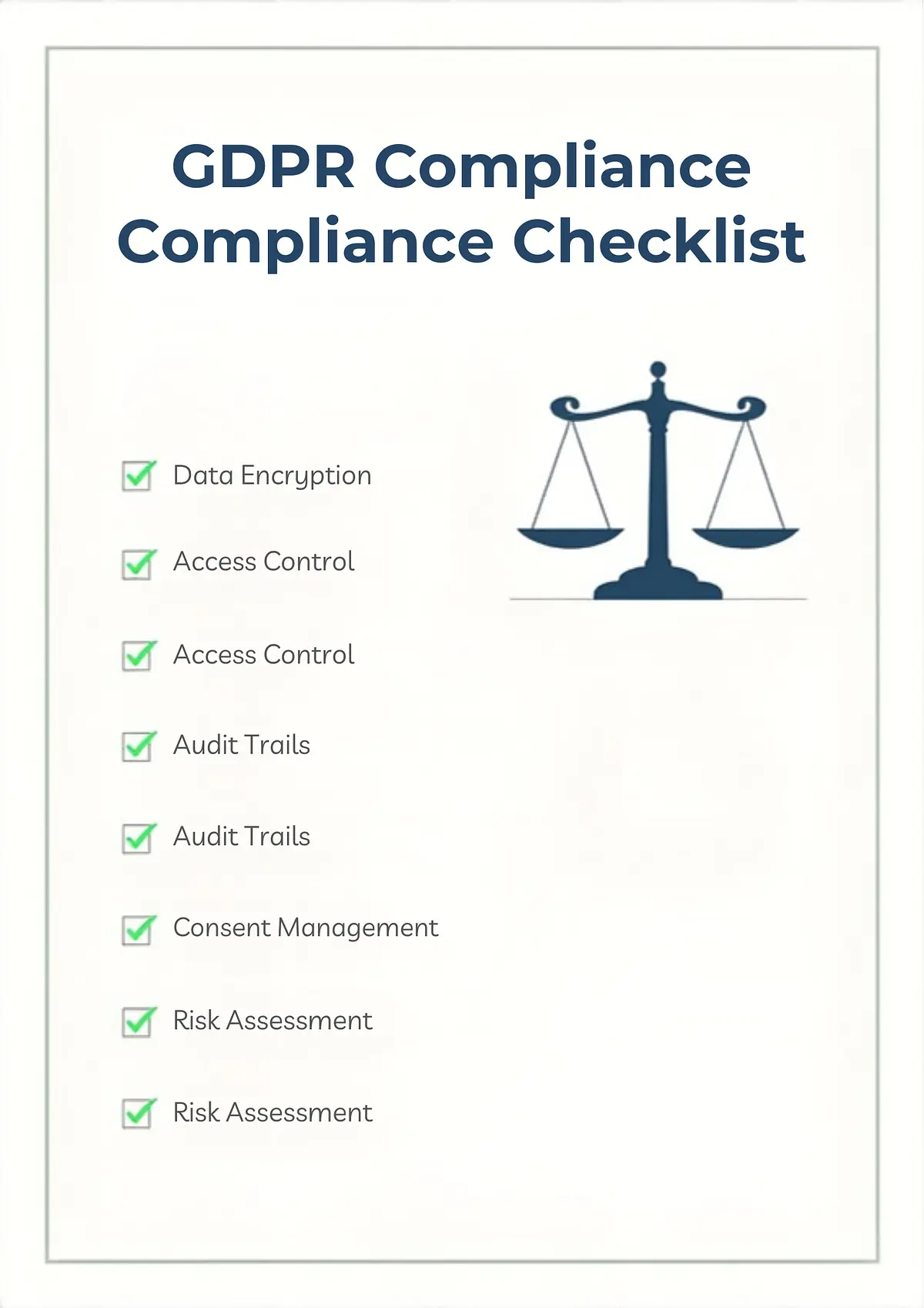
Here's a practical checklist for organizations evaluating AI email assistants:
1. Privacy Policy Review: Read the vendor's privacy policy carefully. Understand what they do with data, how long they retain it, and whether they use it for training. If you can't understand the policy, that's a red flag.
2. DPA Availability: Does the vendor offer a Data Processing Addendum? If not, they're not designed for organizational use. Don't use them.
3. Data Encryption: What encryption methods do they use in transit and at rest? Do they offer end-to-end encryption? Are encryption keys managed properly?
4. Data Retention and Deletion: How long do they retain data? Can you request deletion? How quickly can they delete upon request?
5. Security Certifications: Are they SOC 2 Type II certified? ISO 27001? Have they undergone independent security audits? What was the outcome?
6. Compliance Certifications: Are they GDPR compliant? HIPAA compliant? Can they demonstrate compliance through attestations or certifications?
7. Incident Response Plan: What's their incident response process? Do they notify customers of breaches? How quickly? Have they had breaches? If so, how did they handle them?
8. Subprocessors: Who else has access to data? Does the vendor use subprocessors (other vendors who process data)? Can you audit this chain?
9. Geographic Data Residency: Where is data stored? Some regulations require data to stay within certain geographic regions. Ensure the vendor's storage aligns with your requirements.
10. Regular Audits: Does the vendor allow you to audit their security practices? Can you request updated compliance documentation annually?
Real-World Compliance Scenarios
Healthcare Organization Challenge: A hospital system wants to use an AI email assistant to identify potential patient health issues from email communications with patients. The system wants to train the AI on historical patient emails to improve accuracy. Under HIPAA, this is problematic. Patient data can't be used for model training without explicit authorization from each patient. Getting individual authorizations at scale is operationally difficult. The hospital must either find a vendor that offers a compliant solution (like on-premise deployment with no data sharing), or they must obtain explicit consent from patients before their data is used for training.
Financial Services Compliance: A financial services firm uses an AI email tool to monitor for insider trading violations. The tool analyzes emails for suspicious patterns. GDPR and financial regulations require the firm to maintain audit logs of this monitoring and ensure the AI's decisions are explainable. A black-box AI that flags emails without explanation creates compliance risk. The firm needs a vendor that provides audit trails and explainability.
Marketing Company Shadow AI: A marketing agency's employees start using a free public AI tool to draft client emails without approval. One employee pastes a confidential client contract into the AI tool for help drafting a related email. The contract is now on the vendor's servers, potentially used for training. If the client discovers this, the agency could face breach of contract claims. This is why organizations need Shadow AI detection and approval workflows.
Enterprise Implementation Best Practices
Beyond vendor selection, organizations must implement internal controls:
1. Governance Structure: Create an AI governance committee with representatives from legal, compliance, IT, and business units. Have them approve which AI tools are acceptable.
2. Acceptable Use Policy: Document what data can and cannot be processed by AI assistants. Are customer emails allowed? Employee data? Financial information? Be specific.
3. Employee Training: Employees don't naturally understand compliance risks. Train them on what constitutes sensitive data and how to use approved tools properly.
4. Technical Controls: Implement DLP (Data Loss Prevention) tools to prevent sensitive data from being pasted into unapproved systems. Monitor for Shadow AI.
5. Vendor Management: Establish a vendor management process. Before approving a tool, have legal and security review it. Get the DPA signed. Maintain an inventory of approved tools and their compliance status.
6. Periodic Reviews: Quarterly or annual reviews of which AI tools are in use, what access they have, and whether they still meet compliance requirements.
7. Incident Response: Create a process for responding to AI-related data incidents. Who investigates? Who reports to authorities? How quickly?
The Modernization of Compliance
In January 2025, the U.S. Department of Health and Human Services proposed the first major update to the HIPAA Security Rule in two decades. The updated rules emphasize stricter cybersecurity standards, particularly in response to AI and ransomware threats. This signals that regulators are taking AI risks seriously and that compliance expectations are rising.
The National Institute of Standards and Technology (NIST) released an AI Risk Management Framework providing organizations with a structured approach to managing AI risks. This complements regulatory frameworks like HIPAA by focusing on trustworthy and ethical AI development.
These frameworks indicate that compliance is evolving. Organizations can't rely on yesterday's understanding of what's required. Staying compliant means staying informed about regulatory changes.
Making the Right Choice
The central tension is real: AI email assistants offer genuine productivity benefits, but they introduce compliance complexity. Here's how to navigate it:
For Small Organizations: You likely don't have dedicated compliance staff. Partner with vendors that are genuinely compliant and transparent. Use enterprise-grade tools that handle compliance complexities for you. It's worth paying a bit more for tools designed for organizational use.
For Medium Organizations: You probably have IT and HR staff but limited legal resources. Invest in a clear AI governance process. Get vendor agreements in writing. Use automated tools to detect Shadow AI. Focus on training.
For Large Organizations: You have the resources to implement comprehensive compliance programs. Do detailed vendor assessments. Maintain ongoing audits. Build AI governance into your broader compliance framework.
The key principle: compliance is not optional. Invest in understanding these requirements early, not after a breach forces the issue. Choose vendors that take compliance seriously. Build compliance into your organizational policies and training. Stay informed as regulations evolve.
Your data is valuable—to you and to regulators. Treating it with the respect it deserves means engaging thoughtfully with AI, ensuring that productivity gains don't come at the cost of regulatory violation or data breach.